

"Remember what you've always known, surrender to your essence, and lead from the deepest place within."
The Soundfulness Method
I want to tell you about a woman I sat with in a care facility.
I never learned her name. I do not need to have learned her name for this story to change your life, if you let it. She had Down syndrome. She had deep autism. And for most of the years of her life before the afternoon I am going to tell you about, she had, according to the people who cared for her, been closed in.
That was the word the staff used. Closed in. They also said, on the file that had been handed to us before we walked into her room, some of the words that are used for people like her in every care facility in the Western world. Non-verbal. Avoids eye contact. Does not socialize. Introverted. Sensory-sensitive. Difficult to reach.
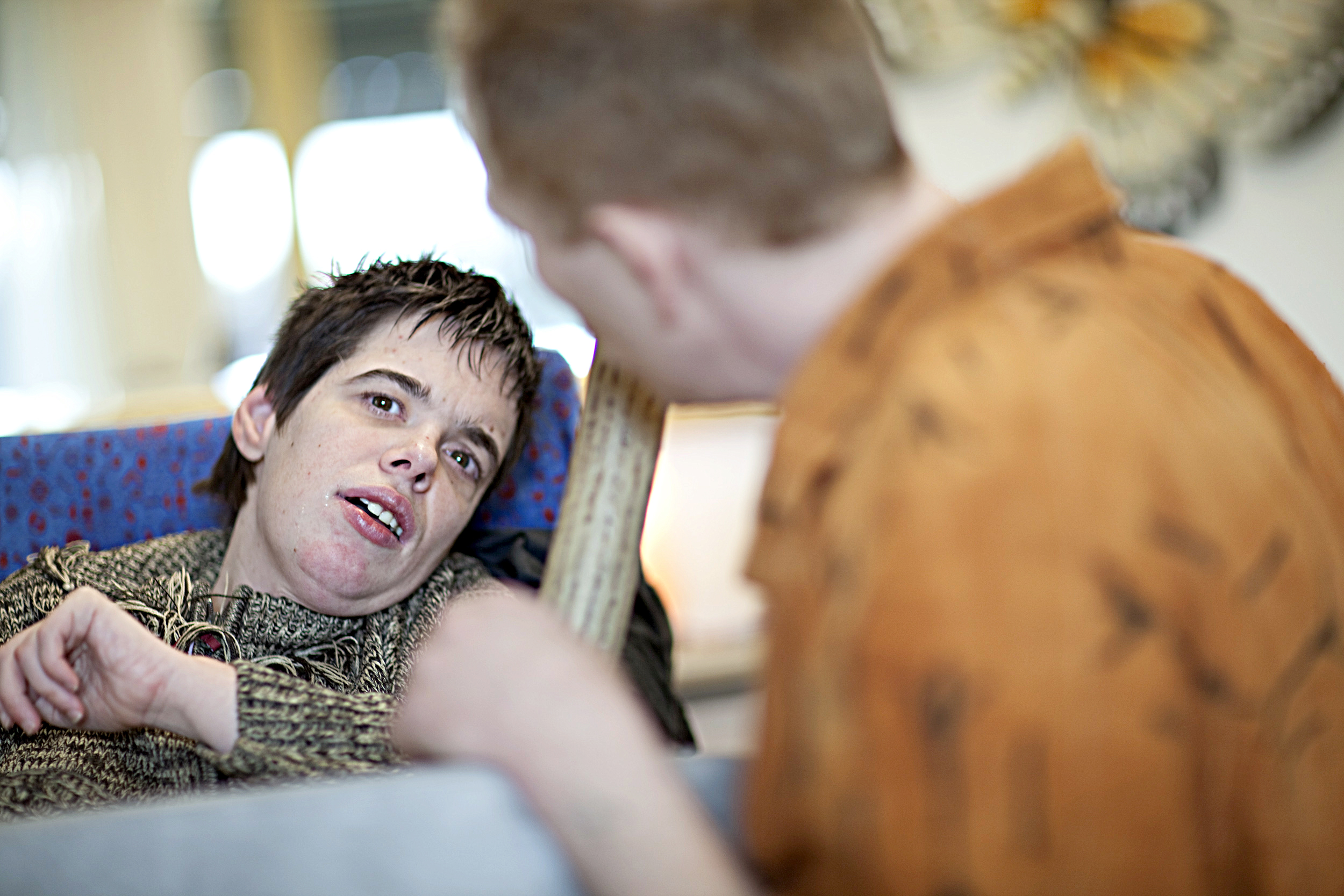
Sound reaches what words cannot. And what it reaches is not broken. It has just been waiting to be met on a frequency no one thought to try.
She was alive inside
I want you to hold those words in your hand for a moment before I tell you what happened, because those words are the whole reason this chapter needs to exist.
The words are wrong.
Not slightly wrong. Not partially wrong. Completely, plainly, devastatingly wrong. She was not closed in. She was not avoiding contact. She was not introverted, and she was not difficult to reach.
She had been alive inside her whole life. And every one of us who had walked past her in the years before that afternoon had missed her, because we had been trying to reach her on a frequency her body was not designed to receive.
Sound found her in about four minutes.
I want to tell you how.
I need to introduce you to a man before I go any further, because the story I am about to tell you was not mine to do alone. Some things in this life you cannot carry by yourself, and the work I do with sound is one of them.
His name is Kees Peters.

Kees Peters
Kees Peters
I met him in 1996 at the Steiner school our children were going to. Not in a workshop. Not at a training. In the ordinary way two men meet in the Netherlands when their children are the same age and they are both waiting to pick them up at the end of the day. We got talking. And within about ten minutes we discovered that we were both, separately, doing the same strange work.
I had a small business at the time called Helende Klanken (healing sounds). He had a small business at the time called Klankheling (sound healing).
We looked at each other and laughed.
The Netherlands is not a big country. Two men, in the same small country, in the same small town, each running a small business with almost the same name, each working with sound as a medium of contact, meeting at a school gate. In an older culture, we would have understood immediately that the field had arranged it. In the country I come from, we called it a coincidence, and then we made time to have coffee.
That coffee has lasted thirty years.
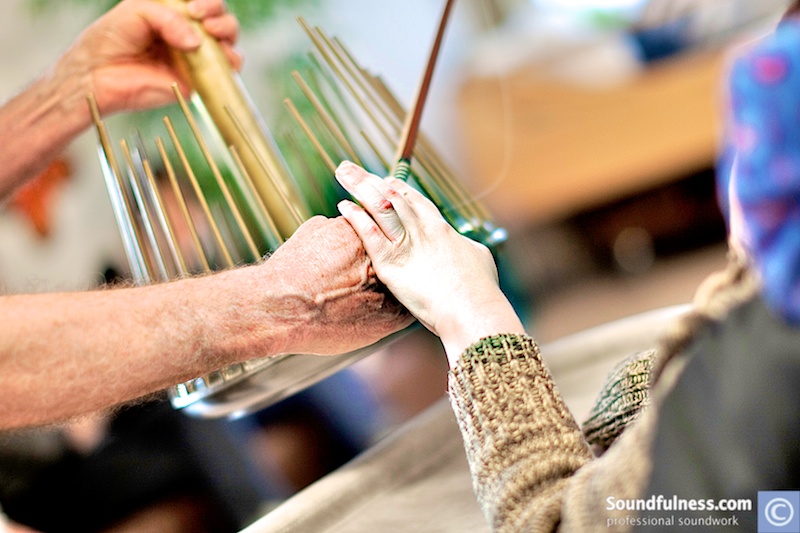
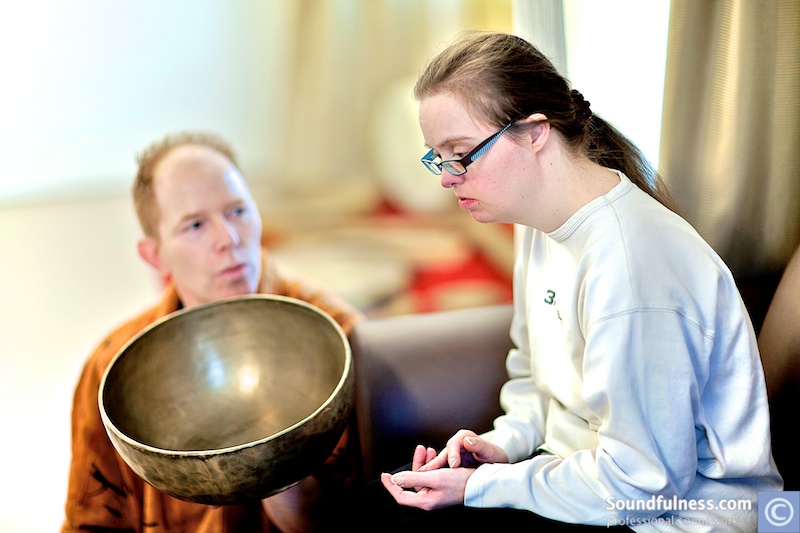
Kees is a biochemist. He is a music therapist. He is a teacher at the Academie voor Open Bewustzijn, the Dutch academy for mindfulness, neuro-sensitive mindfulness, trauma-sensitive mindfulness, and Buddhist psychology, where he teaches other professionals what a nervous system does when it is met on the right frequency.
I say this list of credentials at the start because I want you to know that the man I am about to describe, sitting on the floor of a care room with a subtle rattle in his hand, is not a hippie with a drum. He is a scientist who has spent his life understanding the biochemistry of what happens in a human body when sound meets it. And he is one of the clearest antennas I have ever met.
For the first years of knowing each other, Kees and I ran our separate little sound-healing businesses in parallel. We talked. We compared notes. We sat with each other's clients when a case needed two people. We watched each other work, and we learned from each other in the way two men who are quietly best friends learn from each other, which is by osmosis, over many years, without either of them announcing that a teaching is taking place.
Soundfulness
By the end of those years, we were teaching each other more than either of us was learning from anyone else on the planet.
And that is when we decided to stop being two small businesses and start being one method.
Soundfulness
We spent the next eleven years developing it together. The name was ours, though the substance of it was older than both of us. The name was a play on the word "mindfulness," which had by then become the dominant frame for inner work in the Western world, and we wanted to say plainly, in a single word, what mindfulness on its own was missing.
Mindfulness works with attention. Soundfulness works with frequency.
Mindfulness asks you to notice the breath. Soundfulness asks the breath to be met by a resonance the body cannot ignore.
Mindfulness is a beautiful practice. It has helped millions of people. And, for the deepest work I want to tell you about now, for the people who are so far inside themselves that attention alone cannot find them, mindfulness on its own is not enough.
Sound is what reaches the people who cannot be reached by anything else.
We learned this the hard way, in room after room, over twenty years, with the people the Western world had almost given up on.
The woman in the care facility was one of them.
If you want to read the full story?
You can download chapter 11 on Soundfulness below.
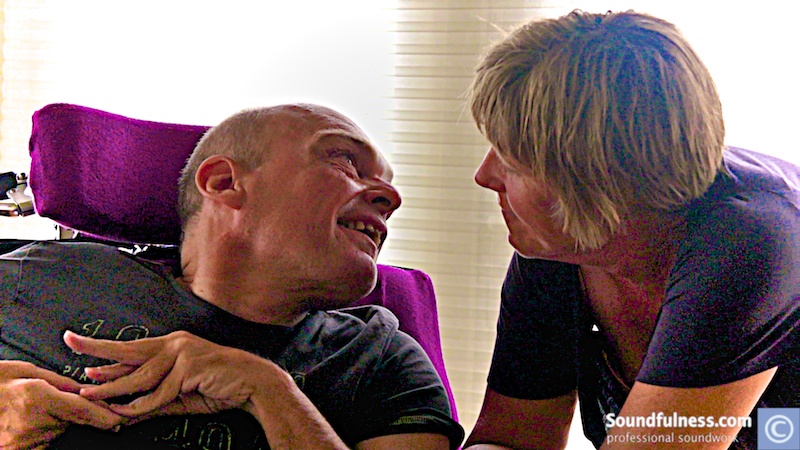
This book is what I found in thirty years of listening...
You can download chapter 11 on Soundfulness.
Surrender to your essence
COMING SOON · A NEW BOOK BY COEN TUERLINGS
No weekly newsletter. No marketing. Only what there is to share when there is something to share.
Coen Tuerlings developed the Soundfulness Method in collaboration with Kees Peters (1996–2016). It is a simple method, influenced by indigenous and ritual ways of thinking and traditions where conscious contact is stimulated with other levels of reality. Kees is now retired. He shaped this method into what it is, and Coen carries it forward from here.
What they built together belongs to neither of them. It belongs to the field it came from and to the people who now work with it.
Coen joined forces with Iris Gommers in 2025 to integrate years of experience into a more holistic method of working with the field.
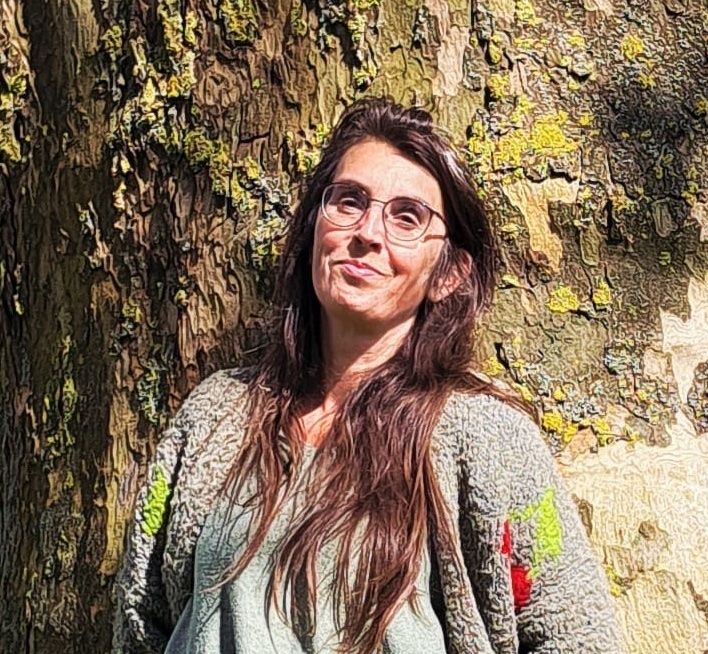
Iris Gommers is a hypnotherapist. She is a medicine woman. She is a master in social and cultural agogics from the VUB in Brussels, which is the Dutch word for someone trained to walk with people through the intellectual, emotional, spiritual, and bodily work of changing a life.
She trained for two years in shamanism at Ahawa and for two years at The Goddess Temple. She is also a poet and a painter. I say this list at the start because I want you to know that the woman I now work with, sitting in a circle with a rattle in her hand or across from one person in a room, is not one thing. She is many things, and each of them is a way of listening.
What she brings is a second antenna, a second frequency the field can be met on, and the ability to hold the deeper individual work that the sound opens up.


Soundfulness® is a method, developed by Coen Tuerlings in collaboration with Kees Peters over twenty years of co-development (1996–2016). Now carried by Coen Tuerlings and the professionals who work with the method.
For more on Coen's work: www.coentuerlings.com
Soundfulness© powered by Soundwork
| Copyright 2026 | Telegraafstraat 54 |
| 5038BM Tilburg | KVK 77662318 |
BTW NL003222167B78